
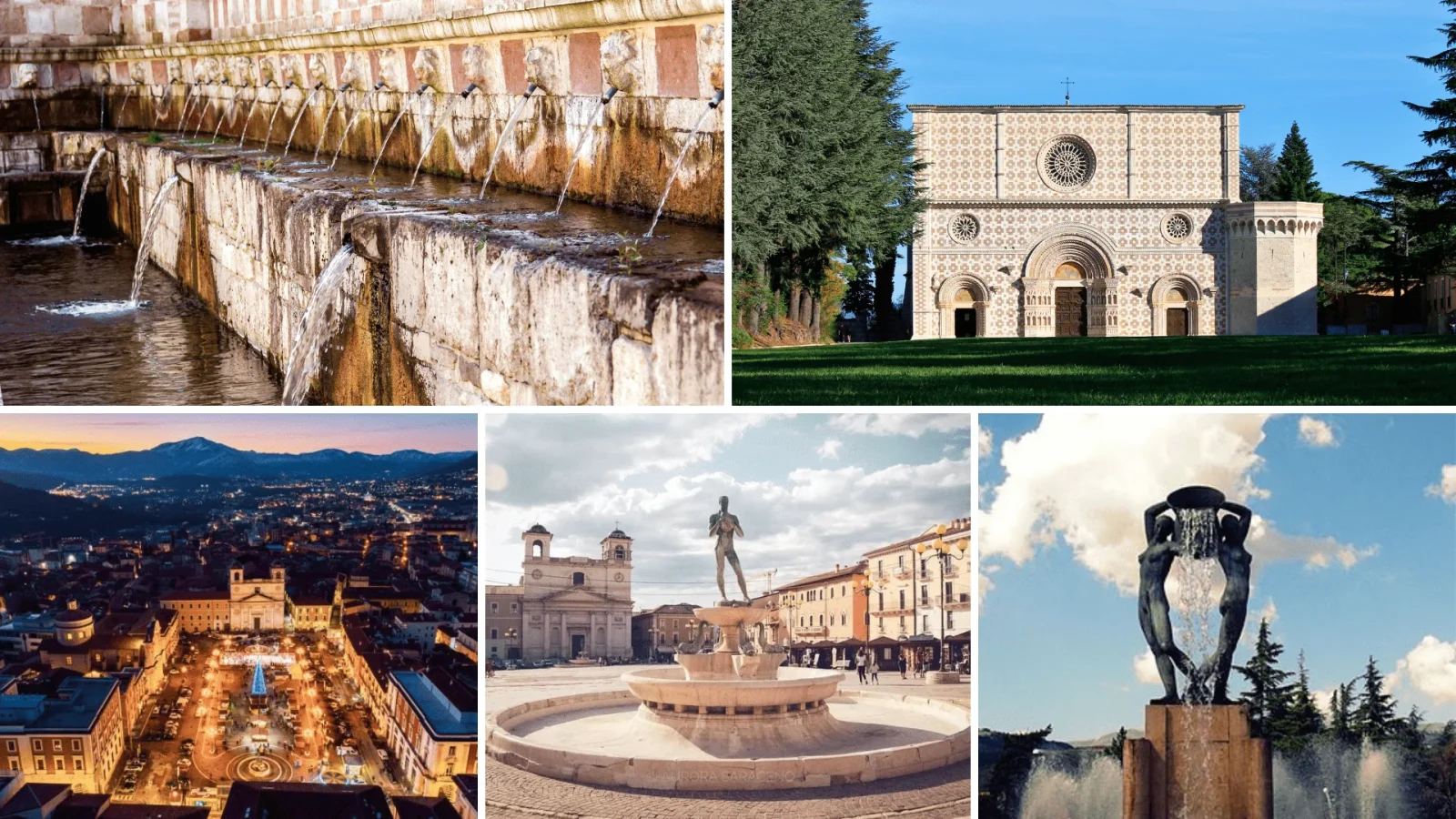
L’Aquila is a city rich in history, culture and architecture. Its museums and monuments include some genuine treasures. One of the city’s landmarks is the Spanish Fort, built in the 16th century to defend against enemy raids. Today it is one of the city’s main museums, with displays of old weapons and a sweeping view over the city.
L’Aquila’s cathedral is the Cathedral of Saints Maximus and George, distinct from the Basilica of Santa Maria di Collemaggio. For access conditions and updates on the works, consult the heritage authority for L’Aquila and Teramo.
The Fountain of the 99 Spouts is one of the city’s best-known monuments. Its 99 spouts represent the number of castles associated with L’Aquila. The fountain dates to the 14th century and is a symbol of the city.
Among the most beautiful noble palaces are Palazzo Margherita, Palazzo Fibbioni and Palazzo Dragonetti. Built between the 16th and 18th centuries, they now house important cultural institutions and museums.
There is more to L’Aquila than history and architecture. The archaeological site at San Vittorino, for example, is a complex of considerable historical importance, with a pre-Roman theatre and amphitheatre and evocative catacombs.
A guided tour is a great way to experience L’Aquila. Many tour companies offer this service, with knowledgeable guides who can add anecdotes and details to the visit. A tour is a chance to learn more about the city’s history and culture and make the visit memorable.
L’Aquila is a city full of history and treasures, ready to welcome visitors who want to discover its artistic and cultural heritage.